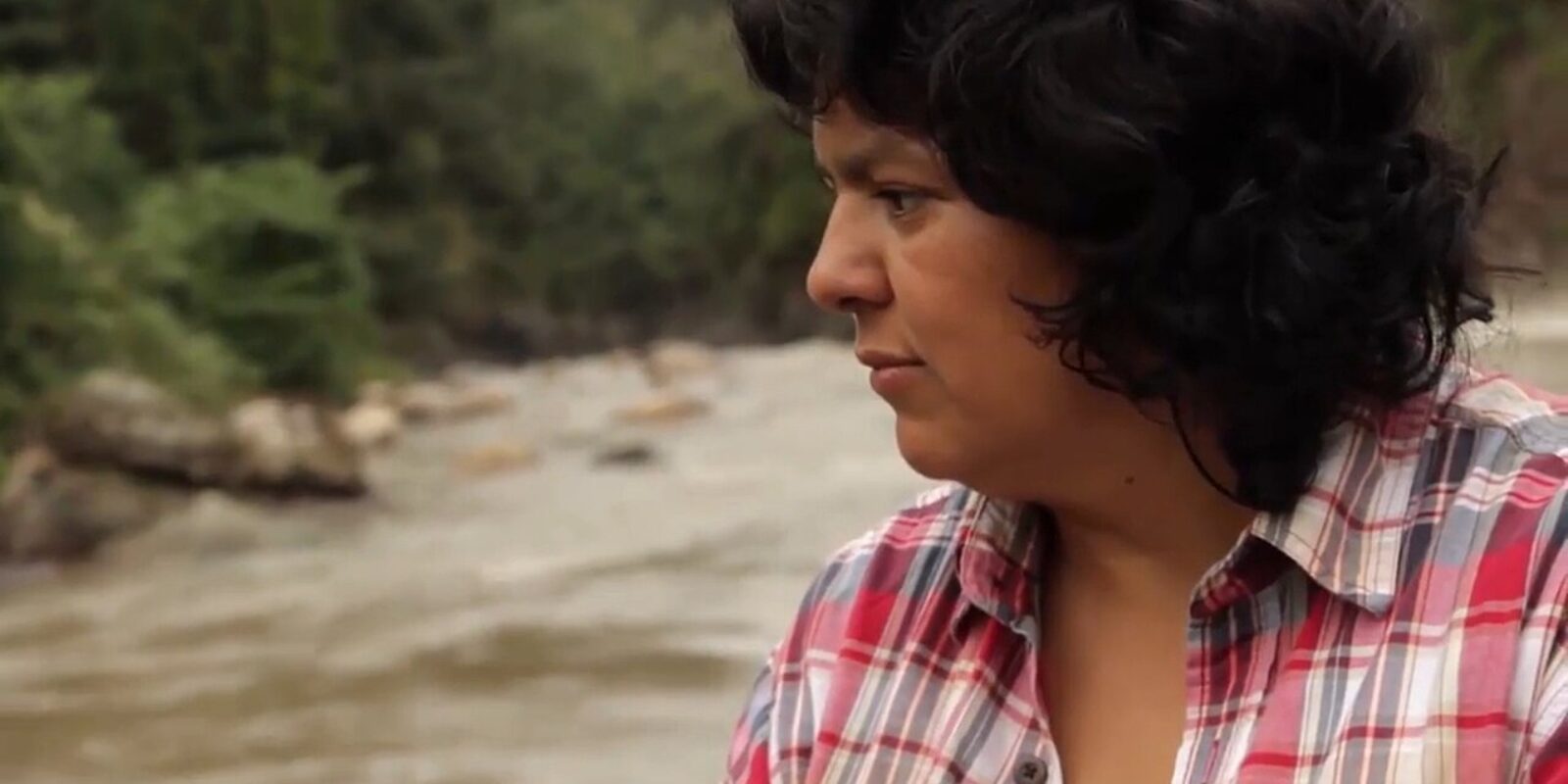
The murder of Berta Cáceres was not an isolated incident or a spontaneous crime. It was the culmination of a prolonged process of structured violence, persecution, and criminalization against an indigenous Lenca woman who was the leader of COPINH and who defended the territory, the Gualcarque River, and the rights of her people against the Agua Zarca hydroelectric project, which was imposed without consultation and supported by business, state, and financial interests.
The report by the Interdisciplinary Group of Independent Experts (GIEI) confirms that the murder of Berta Cáceres was the result of a criminal operation carried out by a broad criminal structure involving hitmen, military personnel, directors and employees of the Atala Zablah family’s company.
As part of the international investigation, it was established that Honduran officials were aware of the crime but took no action to prevent it.
Truth and Justice for Berta and defenders of the territory
The GIEI documented that funds from international development banks (The Dutch Entrepreneurial Development Bank FMO and the Central American Bank for Economic Integration-BCIE) were systematically diverted to finance illegal surveillance, armed structures, intimidation operations, and, ultimately, the murder of Berta Cáceres, revealing a pattern of corporate and financial criminality that operated with high levels of impunity and with the active or passive complicity of public institutions responsible for preventing, investigating, and punishing violence.
Almost ten years after Berta’s murder, the structural causes that made it possible persist: the lack of recognition of the Lenca indigenous territory in Río Blanco, the continued validity of the Agua Zarca project concession, the absence of sanctions against all those responsible the intellectual and financial authors—and the lack of comprehensive reparations for the victims and affected communities.
The GIEI report is a fundamental milestone for truth and justice for Berta and defenders of the territory in Honduras and Latin America. The report also makes clear demands on the Honduran state, businesses, and financial institutions to guarantee justice, reparation, and guarantees of non-repetition.
What is the GIEI?
This investigation is the result of a year of work by the GIEI, a group of three experts established in February 2025 to provide international technical assistance from a human rights perspective to the Honduran state authorities responsible for conducting the investigation into the intellectual authors (masterminds) and related crimes of the murder of Berta Cáceres.
The GIEI in Honduras is the fourth to be established in Latin America following formal agreements between the Inter American Commission on Human Rights (IACHR), the states of the region, the victims and their representatives, as an independent and impartial body for technical investigation into serious human rights violations. Previously, Independent Groups have enabled rigorous investigations into cases such as the disappearance of 43 students in Ayotzinapa, Mexico; crimes against humanity perpetrated in 2018 in Nicaragua; and acts of violence in Bolivia in 2019.
In the case of Honduras, the GIEI had a 12-month mandate that included: 1) Conducting a technical analysis of the lines of investigation to determine the criminal responsibilities of state and non-state actors; 2) Conducting a comprehensive technical analysis of the investigation into related crimes, including acts of corruption and economic or financial crimes; and 3) Developing a Comprehensive Reparation Plan for Victims to include affected communities and ensure the non-repetition of such acts.
The report includes key findings regarding those responsible for the murder of Berta Cáceres, as well as recommendations for ensuring justice and reparation that the State of Honduras has committed to adopt.