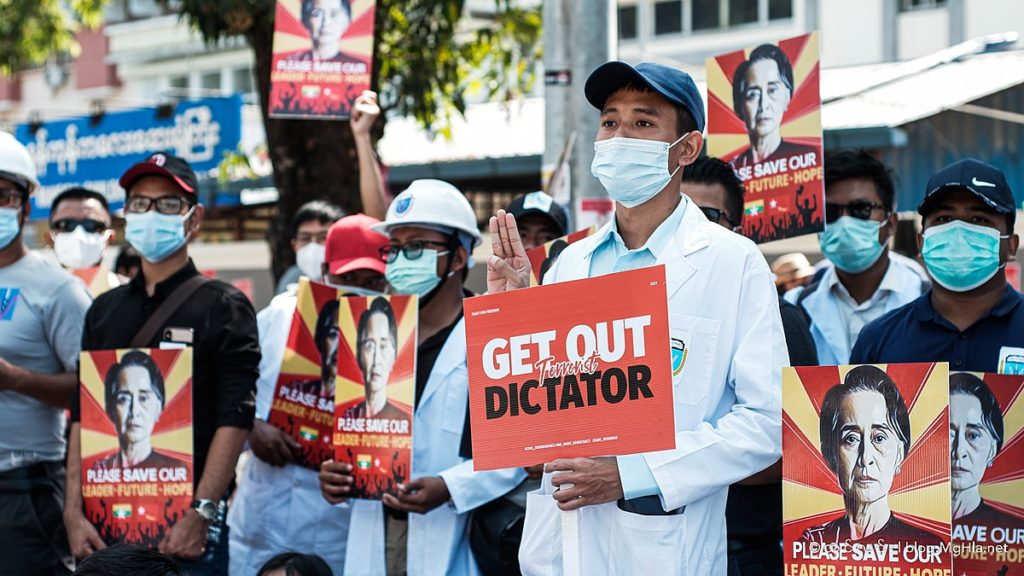
Het Actiefonds supported various protest groups in Myanmar at the time of the coup. An activist tells anonymously about her experiences. Born in Kachin State, she currently works part-time at a small think tank organization in Yangon. Both through her work and on a personal level, she is connected to the protest movements.
General information
Unity “You could describe the currrent period in Myanmar as very hopeful, but at the same time most grim. Never have I witnessed my country in such a united front against the military. Only now do I really understand the struggle of ethnic people and their grievances. It was only when the country was shattered to pieces by the military for the third time in history that we finally found the unity we need to build a federal union.”
Strength of a young generation Despite a glimmer of hope, the future remains hugely uncertain: “I am very concerned about how the situation will unfold in the coming months. The war that the NUG (National Unity Government of Myanmar) declared on the Myanmar military might not lead to a fullblown war, but it will make life very difficult for Myanmar’s working people. There is already a civil war on a large scale in the countryside. Hundreds of people are displaced without receiving any aid. At the same time, the military is breaking down the PDF movement (People’s Defense Force) in urban areas very rapidly. The situation resembles that of David and Goliath; it is amazing to see the unbroken spirit of young people who are sustaining the movement.
Long struggle When asked what it is like to be an activist in such an environment, she emphasizes the importance of cautiousness: “You have to be very careful, both with online and offline activities. It’s going to be a long struggle. Most importantly, you don’t get arrested or killed. I don’t think you can be an overt activist in Myanmar right now – not if you live in the country itself. Every movement is tracked, your telephone communication, your online activities, your mobility, your bank transitions…
Het Actiefonds continues to support the protest movement in Myanmar and maintains close contact with activists. “I think we are all traumatized in one way or another. I really hope the young generation finds peace very soon. I hope we can all heal.”
“The spirit of resistance is unbreakable”
More than half a year ago a coup attempt sparked a wave of protests throughout the whole of Myanmar. We spoke to human rights activist Igor Blaževič about the situation in Myanmar, where has worked and lived for five years. Igor was leading the Educational Initiatives, an educational training program for activists.
General information
So what is your connection to Myanmar?
“When the coup started, I immediately reconnected with friends and former students in Myanmar. I lived and worked there from 2011 to 2016; about three hundred activists took part in courses I organized on transition to democracy. They are all in action now, organizing protests and other actions, risking their own lives.”
“Among Educational Initiatives participants were activists who spent half an hour on a demonstration and then spent ten years in prison for that. They never received normal education at that time; others, coming from ethnic minority areas, are the children of ethnic cleansing, young people who saw their villages looted and destroyed. The main aim of Educational Initiatives was to bring people together from different political and ethnic backgrounds. Building bridges, making connections, that’s what it was all about.” Can you describe what exactly happened during the coup? Why did people take to the streets so en masse?
“It is actually very simple and at the same time very tragic. What happened in short: General Min Aung Hlaing was supposed to retire this year: yet he wanted to become president at all costs. The elections showed that the incumbent NLD party would win again and that USDP, the military proxy party doesn’t stand a chance. In response, the general staged this coup.”
“But Min Aung Hlaing made a mistake. He never expected this huge nationwide wave of protests. The entire population revolted and the army responded with extreme violence. Nonviolent protests were brutally crushed. However, nonviolent protest flashmobs still happen every day, again and again, for six months already. The coup and the brutal violence still did not manage to break the spirit of resistance.”
And now?
“The military uses violence and power to extract any available economic assets. They have plundered all natural resources. From their stronghold, they continue to attack the population, hoping they can break their morale. The other side – the protesters – keep holding on. They continue to resist in every way possible: flash mobs, boycotts, refusal to pay for electricity, noise demonstrations, jungle guerrillas. The economy has collapsed and a civil war is imminent. There is no extra oxygen for people with COVID-19.”
What can you tell about the social movements in Myanmar? Is it even possible for activists to organize themselves?
“At the moment there are many different active groups. Large and small streams forming one strong river current of resistance. The younger people are perhaps the most important, generation Z. They are currently organizing a lot of flash mobs. Many activists are hiding, but they have good networks and use Telegram, Signal and social media to announce and mobilize for actions. They also take a lot of photos and videos and send them out into the world as much as possible. And then there is the neighborhood movement: local residents organize night vigils, walk marches during the day, organize street theater and they too document as much as they can. In very remote villages, the villagers are taking action by crossing rivers with boats and banners. Even Buddhist monks are involved in the resistance. A good example of creative direct action is the coconut protest: streets strewn with coconuts with various cries of resistance.”
But those protesters risk their own lives by taking to the streets. How do they deal with that constant threat?
“Min Aung Hlaing has done something from the ‘cookbook’ of terrorist dictatorial regimes: the military deliberately organizes extremely brutal killings to break morals. It is ensured that these murders are extra visible; this is a tactic, it’s part of a strategic plan. They are aware that the most brutal images will circulate on social media. The goal is to instill fear.”
“But the movement cannot be suppressed. Activists, meanwhile, are aware of this manipulative tactic and have stopped sharing horrific images. Instead, they turn the victims into heroes and spread their story. To encourage fellow activists, not to spread fear and panic.”
What are the effects of grassroots activism in the region?
“I see two amazing results. The first is: mobilization. An entire nation rises. The general may have expected a few protest movements, but we see that the courage of a few people has finally mobilized an entire community. The second is that a protest movement has risen against military power. And for six months (!) the army could not break this resistance!”
“Still, they cannot prevail over the military and armed forces. They need help. From neighboring countries and from the international community. But this urgent assistance is not coming, except from organizations such as Het Actiefonds. We need major international players to end this power game.”
How do you see the future for Myanmar; politically but also specifically for the protest movement?
“There are a few scenarios. One is that the some big international players like Russia and China continue to stand behind Min Aung Hlaing, and other international players like US and EU do too little. Regional players like ASEAN remain passive and ineffective. Then the entire protest movement could be stopped in the end… More probable is the entire collapse of the state. A third scenario is that neighboring countries – along with key international players such as the US and the UK as well as China and India – realize that Min Aung Hlaing is not the solution for the country. Then there might be enough pressure to trigger a counter coup. Maybe then there will be a chance to breathe new life into the country, because change is possible!”
“A cynical outlook is that the military will always win over the people. On the other hand, there is still hope. True, Goliath often prevails, but not always. David also wins, sometimes. And as long as that David is there, there is hope. It is now important that we stay in touch with the people of Myanmar, those who risk their lives and continue to struggle. Networking is so important! Get to know each other, keep talking to each other. Building and coordinating an international network is indispensable. We must unite!”
Igor Blaževič is a human rights activist and founder of Europe’s largest human rights film festival. He was born in Bosnia in 1963. When the war broke out he was already living in Prague, but this event changed his way of thinking. He became an activist, focusing on helping activists in dictatorships. Currently he is a program director at Prague Civil Society.
On Europe’s painful silence – testimony of a Belarusian activist
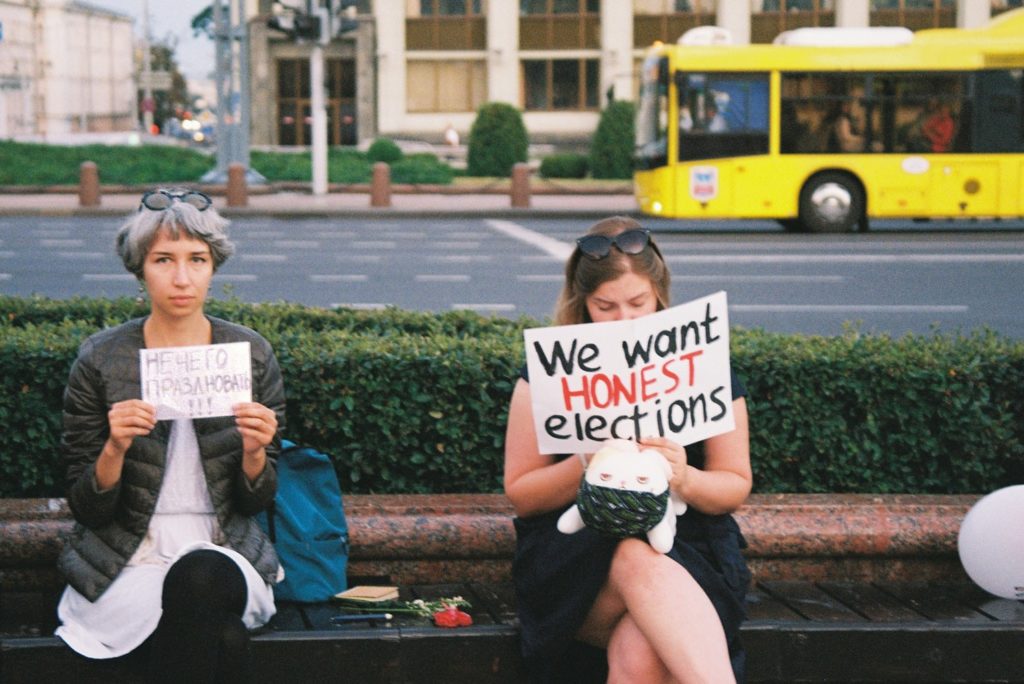
Great unrest broke out in Belarus last year. A revolution seemed imminent. After President Alexander Lukashenko won the elections again, people took to the streets en masse to protest. The population demanded his resignation: never before have so many people protested in this 26-year-long regime.
General information
Het Actiefonds supported various action groups that continued to fight at the risk of their own lives against the oppressive regime of this dictatorial leader. We spoke to an activist who wishes to remain anonymous, from a small town in eastern Belarus.
Can you briefly describe the situation in Belarus before the elections in 2020?
“Even before the 2020 presidential elections, the situation in Belarus was very tense. Society practically choked on the anti-Belarusian politics of Alexander Lukashenko! All his actions are directed against Belarus; he is only concerned with the interests of Russia. Both in Minsk and in my own province, in an extremely remote and isolated part of the country, there were demonstrations in support of Svetlana Tikhanovskaya.[1] All residents wanted change.”
“We saw the whole country straightening its shoulders, as it were, to shake off the Russian tyranny. And the epitome of that is the bloody dictator Lukashenko. The society of my region finally realized that we have the opportunity to change the situation. We all went to the barricades!”
“It is difficult to say why the situation was so different now from previous elections. After all, all the previous ones were kept in the same way: literally all protocols (from district committees to the CEC[2]) were forged in the most incredible ways.”
Can you tell us about your activism?
“‘Group of Likeminded Initiatives’ is an organization of like-minded people committed to positive change in communities in the region and its suburbs. The main target group consists of young people and local residents whose human rights are being violated. Main activities are activating and mobilizing young people, protecting human rights, providing information and various local cultural projects.”
When the election results were out, how did you feel?
“The election results in August 2020 were not much of a surprise to us. The results have always been falsified: not a single stage of the election has been fair since 1996. All members of the Election Commissions are appointed in Belarus by government authorities. The commissions therefore work on behalf of the government and falsify everything, always, for the full 100 percent.”
“But what did come as a shock was the unprecedented beatings and torture of protesters and opposition supporters by the Interior Ministry and other security forces immediately after the results were announced.”
How did Het Actiefonds help you?
“Immediately after the elections, we were greatly helped by Het Actiefonds. In the support of Het Actiefonds we saw the face of European solidarity! And not only in our own region, but also surrounding communities received support for their activism. So yes, the help we received from Het Actiefonds at the time was incredibly significant for our protests.”
We know that a few weeks after the protests, people started to lose their strength and courage. Can you describe what happened? What was the repression you faced?
“It is very difficult for people outside the former Soviet Union to understand what real repression means. But here are a few examples:
1. Losing your job. This is a terrible consequence, especially in small villages where it is almost impossible to find a job. Teachers, workers… Suddenly they can no longer provide for their livelihood. In my own region as many as 150 people lost their jobs. They are on special lists of the Ministry of the Interior or the KGB. Many of them were forced to leave for Russia. Why Russia? Because it is impossible for them to go to Poland or Lithuania. These and other Eastern European countries do not welcome oppressed Belarusians.
2. Suspension of universities and other higher education institutions. This is often followed by forced military service of 1.5 years. In my village, 27 villagers were suspended and sent to the army.
3. Fines. And the amount exceeds your wildest fantasies… An example: the fine for participating in a protest can be up to 1.500 euros. A monthly salary in the city is 250 to 300 euros at most.
4. Deprivation of liberty. The maximum prison sentence ‘to pay for freedom’ in Belarus has now risen to 18 years. I think no further comment is needed here.”
How are you now? And how is the rest of the situation now for you and your fellow activists? Are people still planning new actions?
“How am I now? I have been arrested twice for 10 days since August 2020. I was beaten up by KGB agents. I am currently under criminal investigation under Article 342 part 1 of the Criminal Code (‘organization or preparation of actions seriously violating public order, or participation therein’). I have no idea what my status is. My house has been searched and I am now awaiting arrest.”
“My citizen passport was taken by the KGB. I’ve been out of a job for a long time – I’m a history and socio-political studies teacher (in the past). I used to be an entrepreneur too. However, in the early 2000s, three of my businesses were ruined by the authorities. My wife was also fired because of me…”
“Now my whole family (my wife, son and daughter and myself) makes a living from my nighttime security and unofficial construction work. My wife, a former school principal, does cleaning work for wealthy residents in the village. What can I say about other activists? Their situation is about the same. Many of them have lost the ability to feed their families. There is a massive migration to Russia. And I haven’t even mentioned the people who have lost their freedom…”
Do you often experience a feeling of powerlessness? And what do you do then, how do you keep up the courage?
“I actually feel powerless all the time. I returned to my hometown in the late 1990s. My goal was to make the life of the villagers better, more organic. But since my return, I started to feel more and more powerless. I was always aware of what was happening in Belarus. Lukashenko’s inhumane, anti-Belarusian activities were clear to me. Everything he did was in the interest of Russia. My beloved Belarus slowly turned into Russia… What did I do then? Everything I mention above! And how do I keep up the courage? Lately I can’t do it anymore. My friends and I are all in a state of panic. We now see the consequences of what is happening: Russia is swallowing our country. As a historian I must say that this has of course happened before Austria, Czechoslovakia, Lithuania, Latvia, Estonia, and so on. And as then, Europe is again doing nothing to save Belarus.”
How do you see the future for Belarus? And the future for action groups there?
“Fighting the dictatorship in Belarus is not exactly a rewarding activity. But of course we will continue our work, we will continue to fight against the bloodthirsty Russia and her bloodthirsty personification, Lukashenko… I am sure that ‘Luka’ would have been overthrown by the Belaruss long ago, had it not been for the Russian dictator standing squarely behind him . I am afraid that the situation in Belarus can only be changed if we change the situation in Russia.”
Het Actiefonds remains in close contact with activists in Belarus and stands in solidarity with protest movements worldwide that are suffering from repression.
[1] Svetlana Tikhanovskaya is a political activist and opposition leader. She lost the election, but continued to call for mass peaceful protests from Lithuania. In her own words, she never aspired to the presidency; its goal was to achieve fair elections and a free democracy.
In August last year, Het Actiefonds supported a mass action by Bündnis Rheinmetall Entwaffnen to block the war industry in Kassel, Germany.
General information
Activists from environmentalist, antifascist, queer, feminist and peace movements all participated in the blockades against a large arms factory in Kassel.
“The blockades of the arms factories of Rheinmetall and Kraus-Maffei-Wegman in Kassel started in the early morning. Production came to a standstill. It was communicated to the workers that the blockades were not directed against the employees, but against arms production. The demand to stop arms production in Germany and elsewhere includes the demand to create equal and meaningful jobs.”
After the successful blockade, the different groups then formed a spontaneous demonstration. A recap of the successful, disruptive day of protests has been made, watch it below!
Malawi: public debate on legalizing abortion while government postpones voting
Malawian organization Zenith for Young Women Achievers campaigned with to legalize abortion. Although public debate was sparked in on- and offline media, the government indefinitely postponed to vote on new abortion laws.
General information
The majority of abortion procedures in Malawi are performed under clandestine and unsafe conditions. Complications from abortions have been estimated to account for between 6% and 18% of maternal deaths in Malawi. Abortion is only legal in Malawi to save a woman’s life. A national debate is currently being held on whether or not to liberalize Malawi’s abortion law by providing more exceptions under which an abortion could be legally obtained.
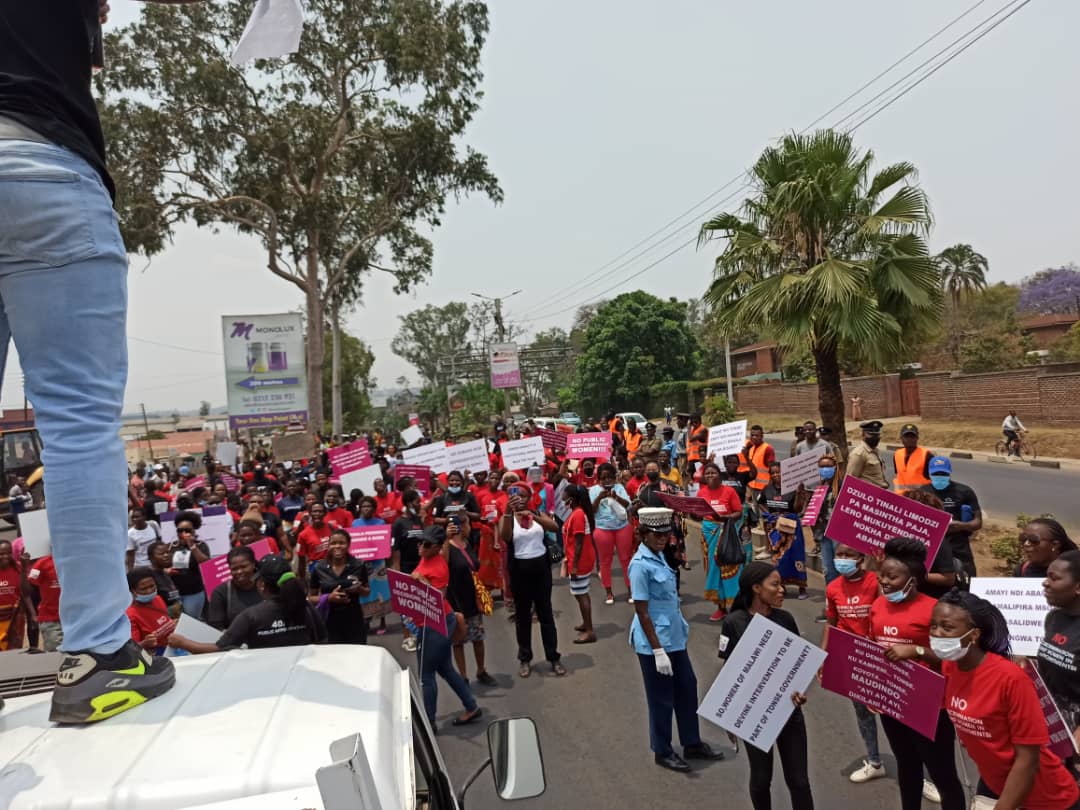
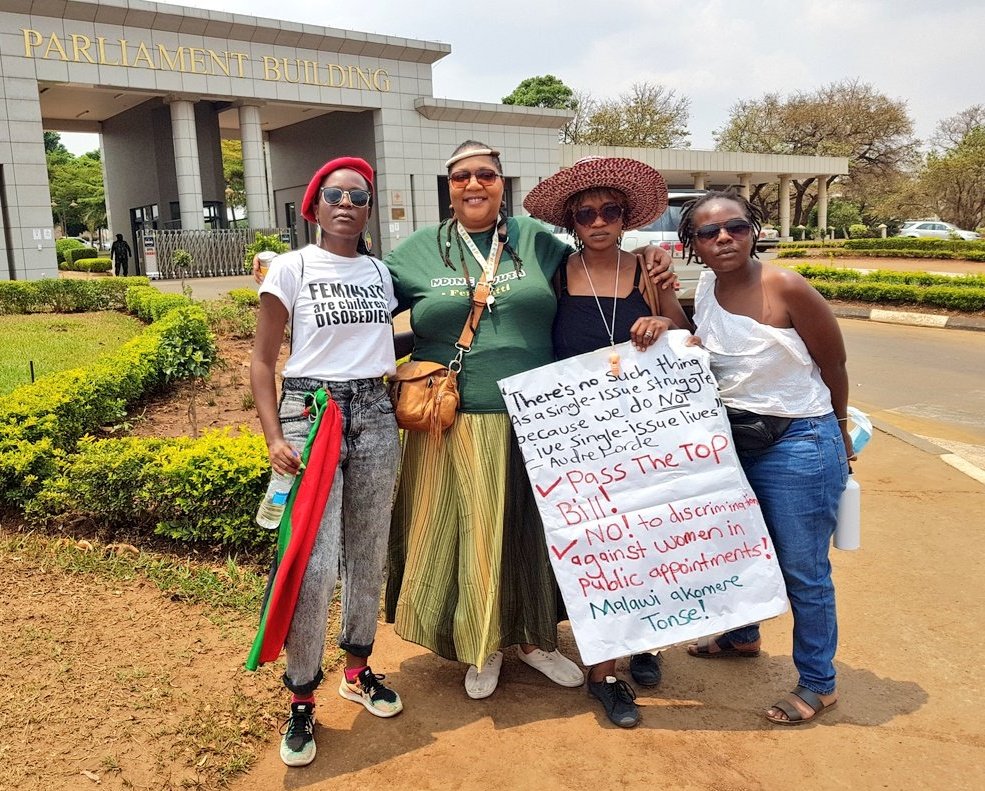
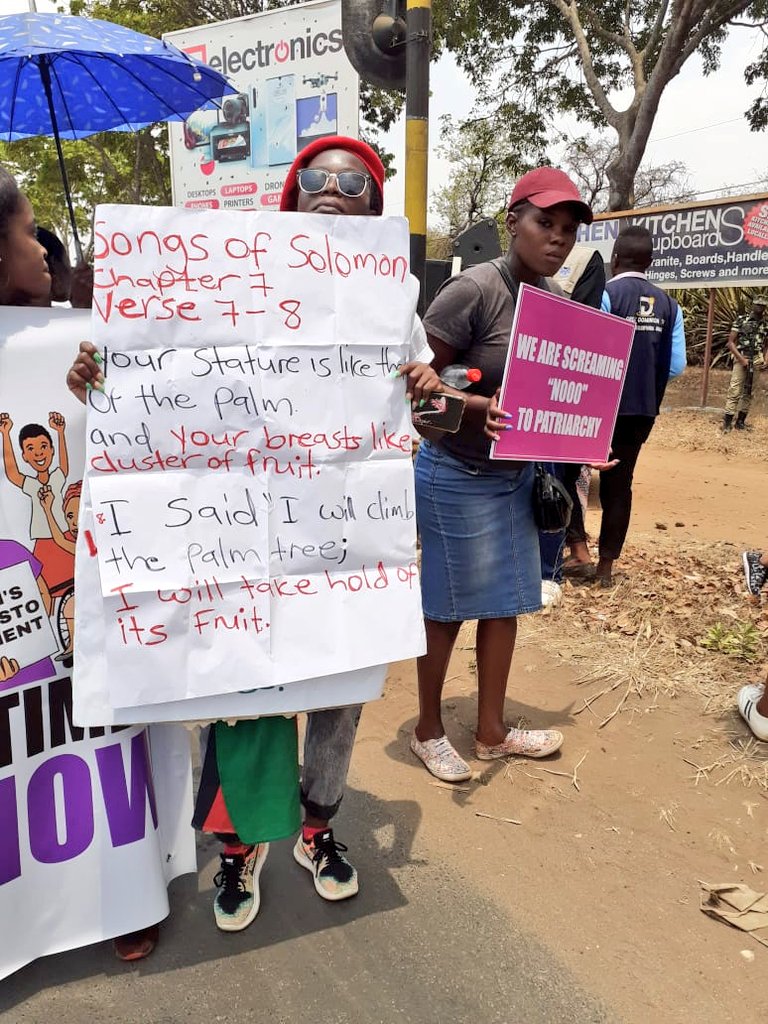
Zenith for Young Women Achievers, together with other organizations, organized a public campaign to discuss and pass the new Termination of Pregnancy Bill. More than 3000 young women and girls in Blantyre and other cities in Malawi participated. The campaign included a solidarity walk in support of members of Parliament, so that the bill can be discussed and passed before the sitting of parliament on October 23rd, 2020.
The organization reflected that the campaign has been successful in igniting a conversation to change the public debate around the bill. The campaign captured the media attention it deserved and members of the general public discussed the bill on social media platforms, radio and television programs. Consequently, many Malawi are aware of the need to deal with unsafe abortion by having legislative and policy reforms. It has not been a complete success, however, because Parliament did not deliberate the bill and the National Assembly has been indefinitely adjourned.
Zenith commented that there is a strong need for mindset change of Malawians on the effects of unsafe abortion. Currently, religion is being used to curtail discussions around the topic, on the back of ideas such as that those dying from unsafe abortion are sinners. This frame of thought is directly resulting in deaths, but on top of that, a lot of resources are being lost treating post abortion complications. The proposed legislative reform will thus protect girls and women directly, but also prevent complications and release pressure on the health care system.
RAINBOW MARCH – Stop forced encampment policy LGBTQIA+ refugees
Following earlier actions against the unsafe living conditions for the LGBTQIA + community in the Kenyan refugee camps, action group Community Support Initiative for Refugees (CoSIR) once again took action to ensure the safety of the group.
General information
Unsafe situation
“The police had failed to guarantee the safety of the refugees and had therefore decided to move them elsewhere. But the camps where the refugees were taken were the same ones they had fled a few months earlier. After a few extremely violent incidents, the organization had indicated once again that they could not guarantee their safety.”
CoSIR once again organised a protest to force UNHCR Kenya and the government of Kenya to end the inhumane encampment policy for all LGBTQIA + refugees. After the protest, a petition was filed with the Commissioner Refugee Affairs Secretariat (RAS) and the Head of Protection and Asylum at UNHCR. Due to the COVID-19 outbreak and subsequent government security measures to prevent the spread of the coronavirus, communication with RAS and UNHCR has been rather difficult. Nevertheless, CoSIR expects a definite answer soon about the measures to be taken to improve the situation in the camps.
This system is untenable and indefensible: beyond the pandemic, beyond capitalism
Bram Ieven is a philosopher and cultural theorist whose research centers on art, politics, and literature in times of globalisation. He is an assistant professor at Leiden University. This article is based on his contribution to our series “New activist perspectives on COVID-19”. Curious for more? Check our social media for new content! Also: consider becoming a donor, and support activists and social movements in these dangerous times.
General information
Relations between global capitalism and the COVID-19 pandemic
I believe that there are four ways in which the emergence of COVID-19 and the unfolding of the pandemic are related to global capitalism in general and to neoliberalism in specific.
First, the way it has entered human society. Like Ebola and Sika before it, COVID-19 entered our society as an indirect result of human invasion and destruction of age-old ecosystems. The marketization of wildlife consumption, which likely caused COVID-19 to enter society, is only one aspect of this. In the past few decades we have seen massive landgrabbing and deforestation taking place. This is done by multinational agriculture companies that buy up forest land in debt-ridden countries and then proceed to repurpose the land for agriculture. We are now starting to realize that massive deforestation and marketization of wildlife is a structural aspect of global capitalism that has led to far reaching and largely irreversible climate disruption, but also to the entrance of deadly pathogens in society.
Secondly, the fact that COVID-19 spread like a wildfire throughout the globe has everything to do with the global flows of capital. Air traffic has increased immensely over the last couple of decades. In as far as human interaction is concerned we are living in a truly globalized world. But that interaction is mostly driven by marketization: a global network of economic exchange and an experience economy that has facilitated an explosive growth in tourism.
Thirdly, the neoliberal character of global capitalism is revealed in the way governments throughout the world initially responded to the virus and in the way they are now already searching for an economically viable exist strategy. In their initial reaction, most Western countries tried to downplay the virus, quite simply because of the impact it would have on the economy.
Fourth and finally, COVID-19 tells us something about the neoliberal nature of global capitalism because it has shown us the extent to which most Western countries have cut down on health services and social care. Recent events have really driven home the complaint that we have been hearing from people working in the health care industry for years now: we are massively understaffed, wages have frozen or have been declining, and the number of hospital beds is spiralling downwards in the name of so-called efficiency.
This system is both untenable and indefensible
I believe it shows us that the current model of society is untenable and indefensible.
It is untenable: we cannot go back to the global capitalism that we have had up until now. If we keep things like they are – if we continue the aggressive deforestation, marketization of animals and wildlife, air pollution and the structural racism and global inequality – then the future is going to be an endless repetition of our current situation. Over the next 100 to 500 years we will slowly but certainly destroy the entire ecosystem, while the racism and global inequality that are needed to keep the structural exploitation of global capitalism alive will only increase.
It’s not only certain death for the planet, it will devoid us of our humanity. In that sense, we have learned that the current system is not only untenable, but also indefensible.
That’s why we cannot wait until this crisis is over to advocate for change. Right now, governments throughout the world are forced to act and anticipate upon the social and economic changes global society is undergoing. It is absolutely pivotal that the policies that are now being developed and that will determine the aftermath of this crisis are focused on human care and a different treatment of our ecosystem.
In as far as change is concerned it means that we need people to understand the structural interwovenness of global inequality, bio-industrial killing and ecocide, and racism that are endemic to global capitalism. On the basis of that awareness we can advocate for a society that has an eco-motived ideal of care as its starting point; a society that looks for ‘the good life’ not just for the 1% and not just for humanity – but for the earth in all its inhumane otherness.
Activism: now more important than ever! Statement concerning the corona crisis
In this crisis Het Actiefonds will double its efforts to keep on supporting activists and social movements all over the world. We ask you to keep on helping us in these difficult times. We call on activists to let us know what they need from us in this period. Activism, more than ever, remains necessary!
General information
The corona crisis has an enormous impact on our lives, on the economy and on politics. Everyday life has been suspended and many actions cannot go through as planned. At the same time we see that many people are rethinking our way of life. All kinds of new initiatives to help each other are emerging. We all need each other to soldier on: solidarity isn’t a luxury, it’s a basic necessity. For Het Actiefonds this means an extra encouragement to keep on doing our work. The crisis makes it plain that fundamental change of our societies is the only true way out. Events are cancelled and demonstrations are prohibited, yet this is the time to work for that change. We will briefly explain why.
1. The corona pandemic is a natural disaster. Human beings aren’t the virus. At the same time it’s clear that the intensity of the pandemic is unthinkable without globalised capitalism. It’s this system that we all live in that undermines our health and makes our lives extremely vulnerable to economic crises. We must put people before profits again, during and after this crisis.
2. The climate crisis is the large version of the current crisis. The destruction of biodiversity is one of the reasons we’re exposed to contagious diseases. In many parts of the world the consequences of climate change are already claiming victims. We’re experiencing now, in the rich Western part of the world, that we’re not invulnerable either. In order to prevent this situation from getting even worse, we need urgent climate action now.
3. In combating the pandemic, states all over the world have increased their executive power. It was necessary to implement drastic measures, but we can’t allow this to become permanent. Already authoritarian leaders are exploiting the state of emergency to crush personal freedoms, democratic rights and political resistance. If we don’t continue to fight for our rights and those of our fellow human beings, this crisis might cause us to lose more than our health.
4. Rich countries have the healthcare and financial means necessary to save lives. This isn’t the case in the Global South. As a result, global inequality between rich and poor is turning into a matter of life and death. This is already the case for refugees in Europe: they’re abandoned to their fate. For poor people outside of Europe the same is likely to happen on an enormous scale. To save lives, what we truly need is international solidarity.
All over the world activists and social movements fight for fundamental change. They know that this system doesn’t work and that we have no choice but to work towards a world in which solidarity and equality can truly exist. This is now more important than ever. Het Actiefonds will therefore keep on supporting all those people who are fighting for change. We will figure out with them how we can help best in these times of crisis. We call on activists to let us know what can kind of help they require from us now. We ask you to keep on supporting us in these difficult times, and together with us and activists all over the globe help realising a better world.
Like always we will keep you up to date about our efforts, but for now we want to emphasise: stay safe and stay healthy!
Mining stopped thanks to successful protest
The local population of the municipality Lousame in Spain took creative action against the mining activities on their land. By planting native trees in the mining shafts and holes, they simultaneously reclaimed and restored their stolen land. Now mining company Sacyr Group is giving up.
General information
Multinational Sacyr Group has announced they will stop the extremely polluting mining activities. This message came after the local population took action. With support from Het Actiefonds they planted hundreds of trees and thus won back their land. A huge success! The communities have indicated they will continue to plant trees in the coming years, to cleanse the polluted soil.
Successful action by Aliansi Barisan Kesetaraan on Java
De Indonesische actiegroep Aliansi Barisan Kesetaraan voerde de afgelopen maanden meerdere malen actie op Java. Ze demonstreerde voor de rechten van LGBTQIA+’ers. De regenboogvlaggen en de blauw, roze, witte transgender-pride vlaggen kleurden de straten. Tegelijkertijd deelden zij rozen uit, waar een activistische boodschap aan gebonden was.