From July 25 until August 8, the streets of Amsterdam will be turned into the backdrop of WorldPride for the first time. Commemorating the first four gay marriages that were officiated in the city 25 years ago, Amsterdam’s 2026 Pride is expected to draw twice the usual number of visitors (600.000).
No one is free until everyone is free!
The Netherlands
ACTION · Dyke March
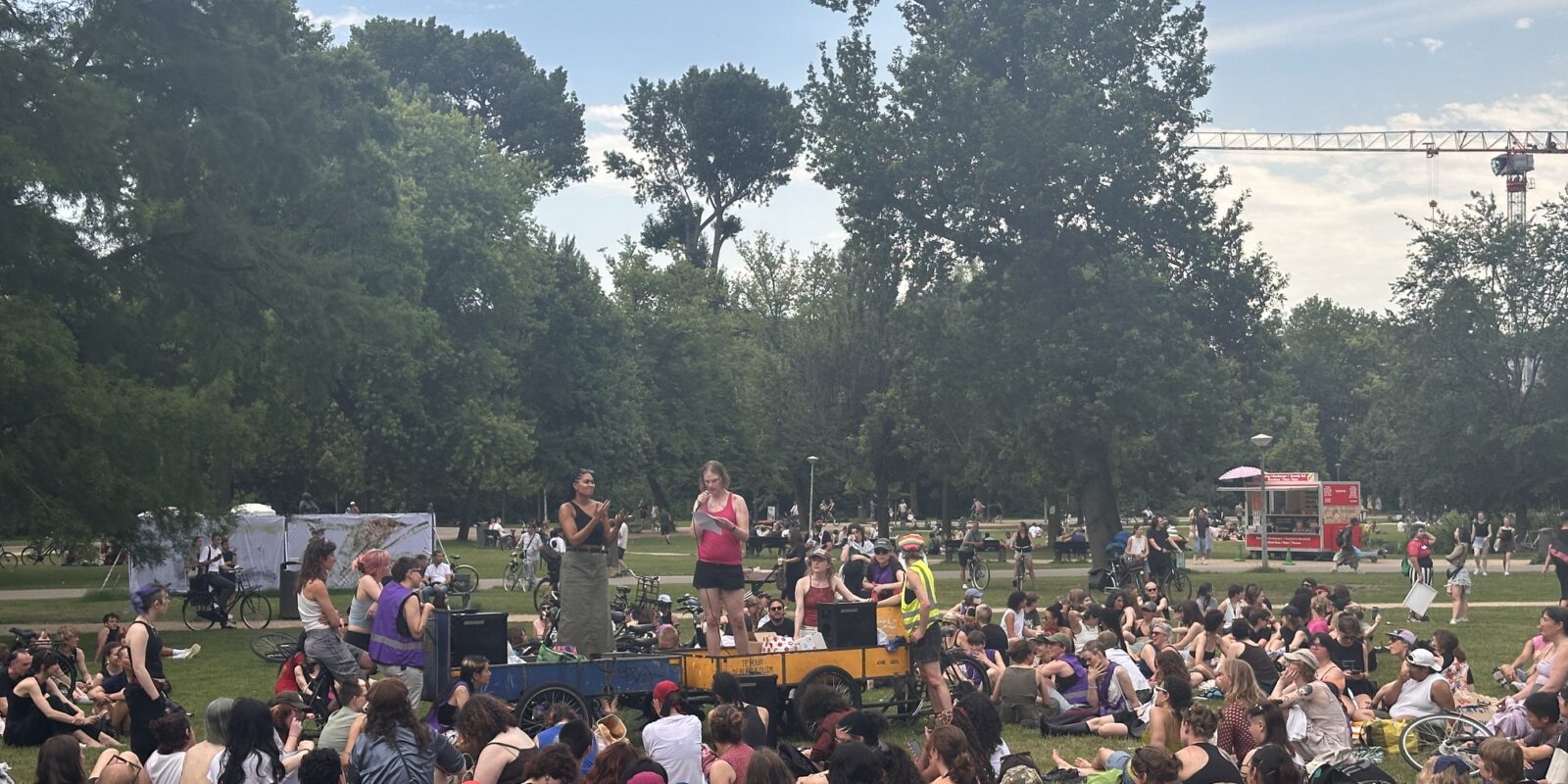
To provide a radically solidair counterpoise against the rainbow capitalism of (World)Pride Amsterdam, a Dyke March was held on the 27th of June.
donate now
Action
The complicity of (World)Pride Amsterdam
With ‘Unity’ as its official theme, the event forms a response to declining levels of lgbtqia+ support among parts of the Dutch population and policy failing to protect the rights of queer individuals, lagging behind the example of other European countries. Amidst the electoral success of the radical right and disregard of minority rights, 10 percent of lqbtqia+ individuals in the Netherlands are now estimated to become victim of queerphobic violence; for genderqueer and non-binary persons, this probability is even one in four.
Although resistance is, therefore, absolutely necessary, the role of (World)Pride Amsterdam in this protest has been widely disputed. With Booking.com as its head sponsor, and KPN, ING and KLM as official partners, Amsterdam Pride affiliates itself with multinational companies that pollute the environment and appear in the UN’s rapport ‘From Economy of Occupation to Economy of Genocide’, suggesting their complicity in the genocide of the Palestinian people – including its queer citizens. How can an event that claims to fight for queer rights and the inclusion of all on the biggest platform of the world, support the genocidal actions of the Israeli entity?
It simply cannot. Amsterdam Pride fights for the inclusion of only some queer people and the irony of Unity as the event’s official theme cannot be overstated.
An alternative protest
Each year since 2022, an Amsterdam Dyke March has been held during Pride Month to offer an alternative and more radical mode of commemoration and resistance for the queer struggle. Placed in a longstanding tradition of the lesbian community, the Dyke March aims to highlight the importance of mutual aid in a time when gentrification and social exclusion threaten the queer movement. The march not only seeks to display a countermovement against all forms of systemic oppression, but also lifts up and gives a platform to unheard voices in the community through fundraising.
For this year’s march, several guest speakers were invited to share their experiences of being queer and the march’s route led past spaces that enhanced the topics they addressed. These themes included disability justice and trans activism, but also the experience of immigration as a queer individual and the pinkwashing and rainbow capitalism of Pride Amsterdam. The speeches can be found here.
Together, the protestors made themselves seen and heard in Amsterdam’s public spaces and showed that Pride can be combined with radical solidarity. Het Actiefonds is proud to have supported this action and will continue to stand in solidarity with intersectional queer resistance.
Support the project ‘ACTION · Dyke March’ and donate
Make a donation
Support Het Actiefonds with 10 euros a month and make actions happen worldwide
donate now